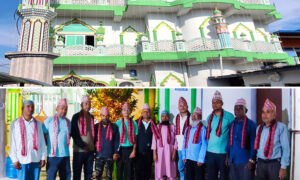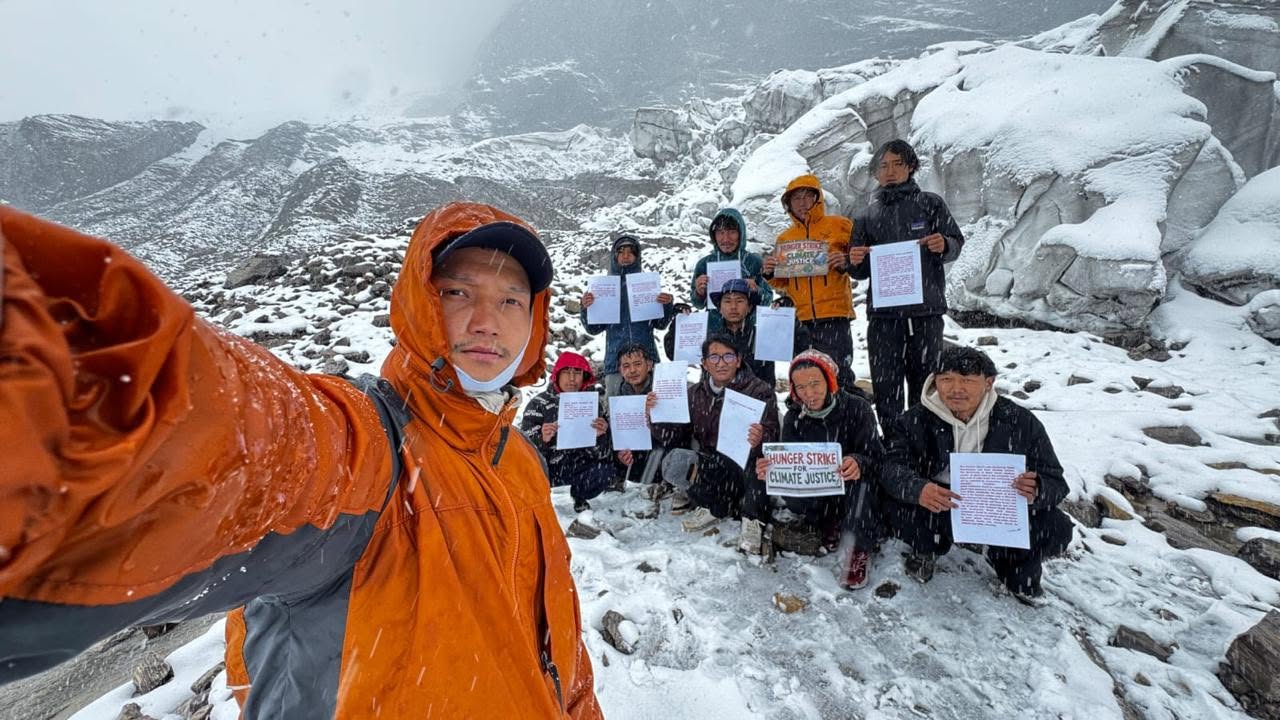
GORKHA: Concerned about the growing risks posed by climate change to glacial lakes and downstream communities, a group of 11 people has begun an indefinite hunger strike at the Manaslu Base Camp in Tsum Nubri Rural Municipality–1, Samagaun, Gorkha.
The protest was led by Dhawa Nurbu Lama of Samagaun, who submitted a three-page handwritten petition to the Chief District Officer of Gorkha on September 13, 2026 (B.S. 2083/05/28). In the petition, Lama called for urgent measures to protect the lives and livelihoods of people living in the Himalayan region as well as communities in downstream areas that may be affected by glacial lake outburst floods.
According to the petition, the group began the hunger strike on September 18, 2026 (B.S. 2083/06/02) at the Manaslu Base Camp, demanding stronger monitoring of glacial lakes and improved disaster preparedness.
The protesters have called for aerial monitoring of glacial lakes in the Manaslu and Tsum valleys, particularly those considered potentially hazardous. They have specifically demanded detailed studies, including depth measurements and risk assessments, of Birendra Lake, the lake in Dhunsar Phuk, three large potentially hazardous lakes in Kochuthang, Kal Lake in Prok, the Green Lake in Pungyen and Doba Lake in Manang.
They have also demanded the installation of water-level monitoring systems in glacial lakes and rivers, along with warning sirens in vulnerable settlements so that local communities can be alerted when water levels rise.
Another key demand is joint monitoring by the concerned authorities of Nepal and China of glacial lakes located in the Tibetan region across the border from settlements in Nepal. The group has called on the government to establish regular monitoring of all glacial lakes across Nepal, rather than focusing only on the Manaslu and Chum regions. They have also suggested involving conservation organizations working in the Himalayan region in regular monitoring and early-warning activities.
The protesters have further demanded that climate change and its impacts be incorporated into the curriculum of community schools in Himalayan areas. They have urged the Nepal government to strengthen its efforts to seek climate compensation and climate justice from developed countries that have historically contributed more to global pollution and greenhouse gas emissions.
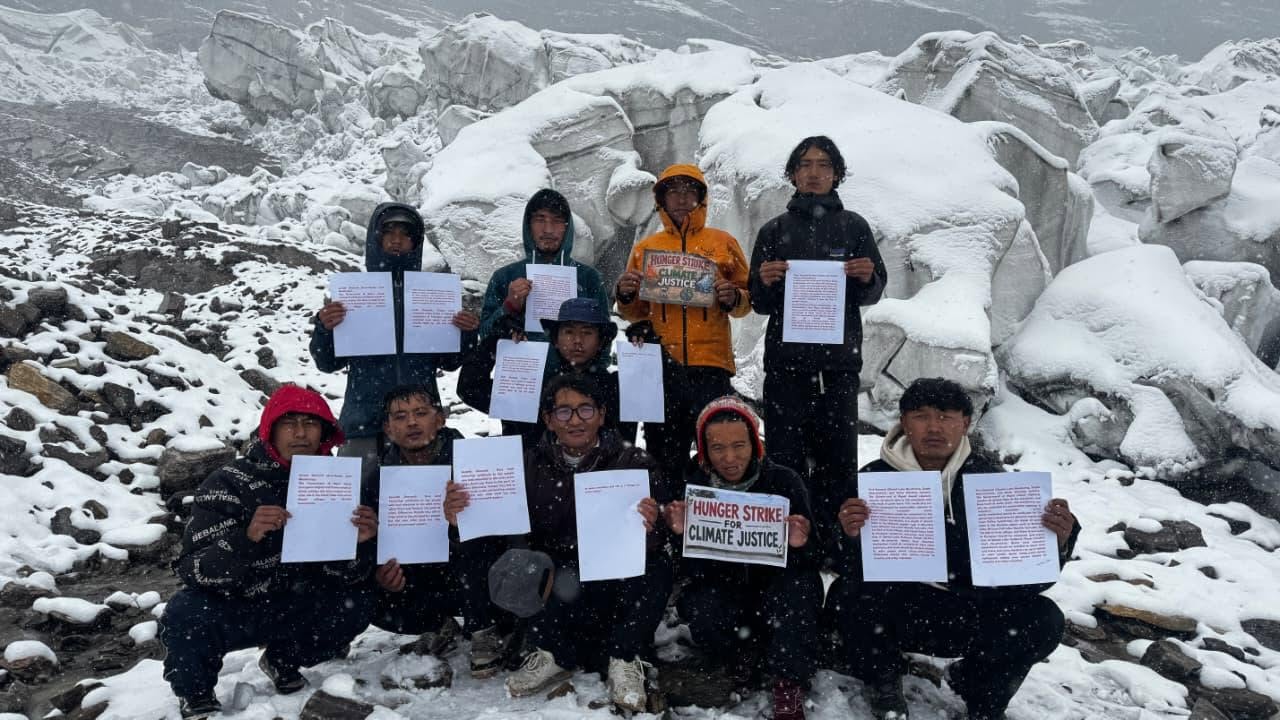
The group has also called on national and international non-governmental organizations working on climate issues to hold consultations and meetings in Himalayan communities instead of concentrating such activities in urban areas. According to the protesters, direct engagement in affected communities would allow organizations and policymakers to better understand the actual impacts of climate change on the Himalayan region.
The protesters have additionally raised concerns about the possible effects of El Niño on weather patterns and Himalayan ecosystems. They have called for stronger disaster preparedness and risk-reduction measures, particularly in vulnerable communities, in anticipation of possible changes in rainfall, temperature and other weather patterns.
The group has emphasized that the impacts of climate change in Nepal’s Himalayas are not solely a national concern. They argue that the protection of Nepal’s glaciers, glacial lakes and Himalayan ecosystems is also important for communities and countries downstream that depend on the region’s water resources.
Through the hunger strike, the protesters are seeking immediate government attention to glacial lake monitoring, early-warning systems, climate justice and stronger disaster preparedness measures to protect Himalayan and downstream communities.

नागरिक समाज सञ्चार नेटवर्क प्रा.लि.
अध्यक्ष – काैसिना मियाँ
सूचना विभाग दर्ता : १६९०–२०७६/०७७
प्रेस काउिन्सल नेपाल : १९५२–२०७६/०७७
मुख्य कार्यालय : बालाजु-१६, काठमाडाैं, नेपाल
फोन : ०१-४९७३२२२
माेबाइल : ९८५६०४०७६१
इमेलः [email protected] (समाचार)
[email protected] (विज्ञापन)
कार्यकारी सम्पादक : मोहसिन अलि मियाँ
सम्पादक : राजेन्द्र कोइराला
बजार ब्यवस्थापक : सुदीप श्रेष्ठ
© 2026 All right reserved to civilkhabar.com | Site By : SobizTrend